Improving the Universal Credit experience for terminally ill claimants
I collaborated with a User Researcher and Content Designer to improve a section of the Universal Credit registration process related to terminal illness.
Current policy fast-tracks those with less than 6 months to live for higher payments and no work requirements. However, most claimants flagged as terminally ill during registration were not.
Our goals were to understand why this misreporting occurred and to enhance the experience for those who truly had a terminal illness.
Insights
We spoke with internal experts and colleagues in Manchester working on similar health registration issues.
It became clear that the DWP's definition of "terminal illness" (6 months or less) conflicted with users' understanding, as some terminal illnesses (e.g., motor neurone disease) can extend beyond 6 months.
Prototype V1
We decided to dig a bit deeper into the terminal illness comprehension and were able to meet with 5 users at the PIP assessment centre in Canterbury and show them our initial prototype.
Prototype version 1
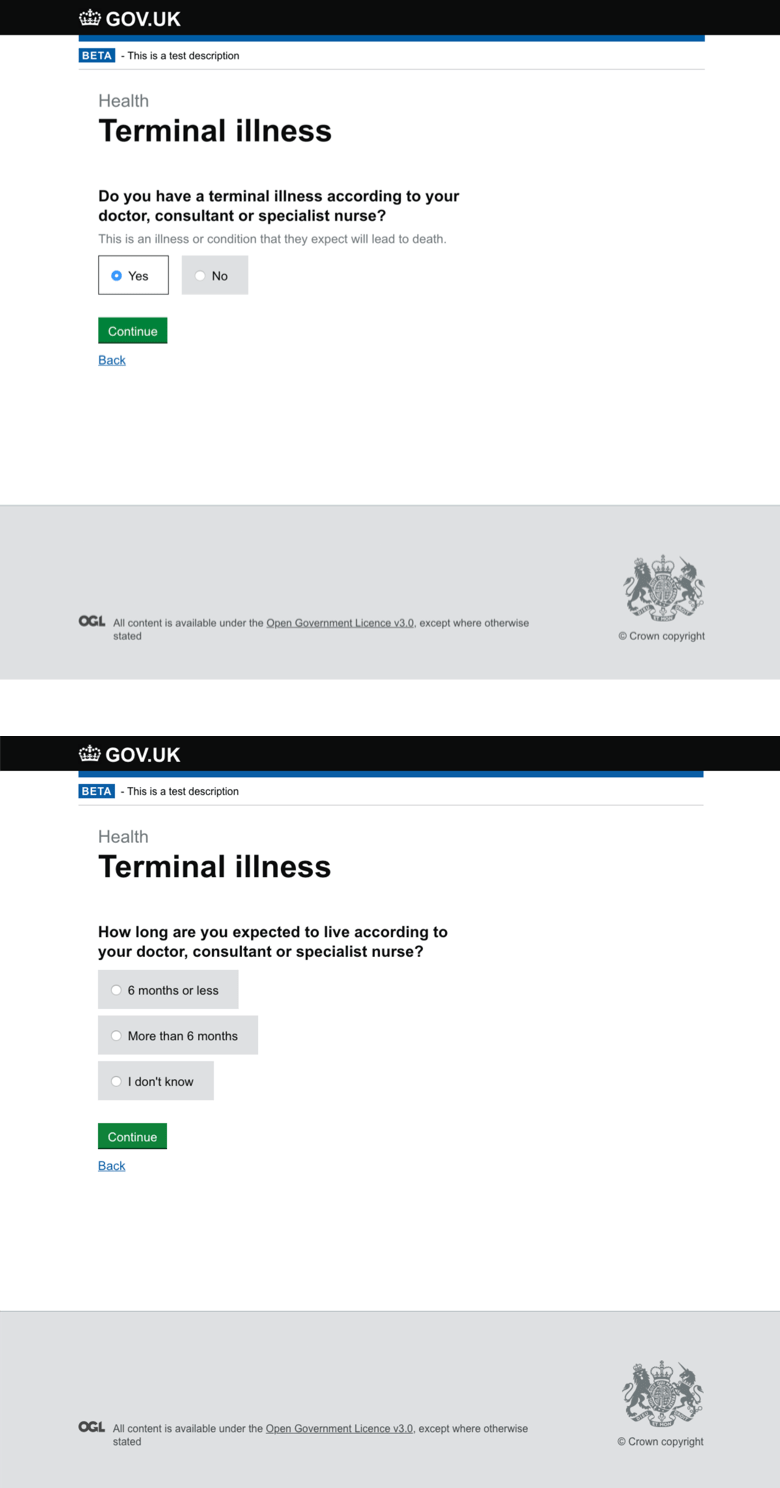
As expected we found the majority of the users didn’t entirely understand what terminal illness is.
All of the users we spoke with had long term health conditions (asthma, diabetes etc) and some thought of these as terminal, and therefore indicated that they would select terminal illness.
Prototype V2
For the 2nd iteration we removed the first screen and dropped the term terminal illness from the question. We introduced less than 6 months to live to match with the DWP terminal illness policy.
Prototype version 2
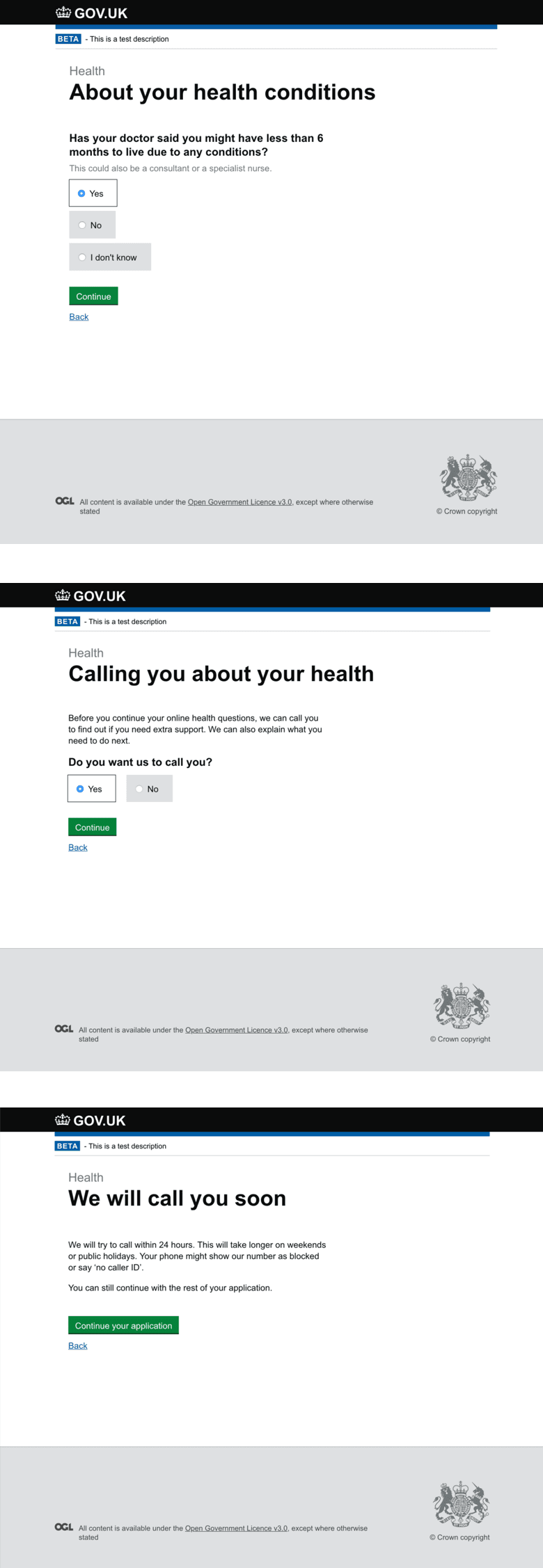
This more direct line of questioning worked better with users who had a long term illness.
We added the callback screens and a line of text on the final screen which read, your phone might show our number as blocked, or say ‘no caller ID’.
This was to try to reduce the problem agents were having with claimants not answering their phones.
Final round
We presented our prototype to support staff at the Maggie’s Centre in Fulham, where we gained further insight into the challenges terminally ill patients (or their carers) face when claiming benefits.
Impact
The redesigned journey was integrated into the Universal Credit registration flow, reducing the incorrect callback rate by 78%, saving the department money and improving the claimant experience.